
$1.5M to ALS research

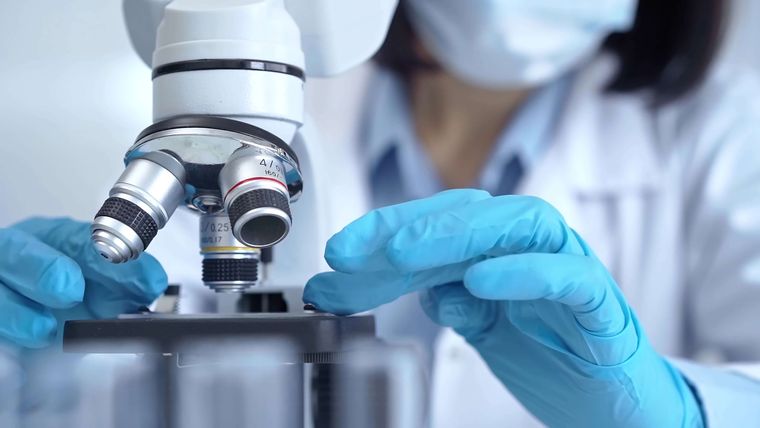
Brain Canada and ALS Canada award $1.5 million to six research teams driving discovery in ALS research.
Brain Canada and ALS Society of Canada (ALS Canada) are proud to announce six Canadian research teams receiving funding through the 2025 ALS Canada–Brain Canada Discovery Grants, a $1.5 million investment supporting projects designed to deepen scientific understanding of amyotrophic lateral sclerosis (ALS) and accelerate the development of potential treatments. These grants enable Canadian researchers to pursue high‑impact ideas and drive urgently needed progress for people affected by ALS.
The Discovery Grant program strengthens Canada’s ALS research ecosystem by providing targeted support for projects at different stages of development. It includes two funding streams: the Seed Grant ($125,000 over two years), which supports early‑stage concepts with the potential to spark new discoveries, and the Development Grant ($500,000 over three years), which supports projects backed by strong preliminary data that are moving toward real‑world impact. Together, these grants ensure researchers have the resources they need to advance promising ideas.
“Our partnership with Brain Canada plays a vital role in advancing ALS research in Canada, and we are grateful for their leadership and collaboration. The Discovery Grant program is unique because it supports both new ideas and the more advanced projects that build on early momentum. Canadian researchers are driving promising advances, and sustained funding is essential to keep that momentum moving and deliver discoveries that matter for people living with ALS.”
Dr. David Taylor, Chief Scientific Officer at ALS Canada
“Our partnership with ALS Canada reflects a shared commitment to advancing research that can transform the lives of people affected by ALS. By supporting both innovative early-stage ideas and projects with strong foundations, this program helps accelerate discovery across the research continuum. Strategic, collaborative investment in Canadian science is essential to driving progress and delivering meaningful impact for those living with this devastating disease.”
Dr. Viviane Poupon, President and CEO, Brain Canada Foundation
Summary of the 2025 ALS Canada–Brain Canada Discovery Grants
Seed Grants:
Can we identify the cellular “address labels” that guide RNA molecules in ALS motor neurons?
Mechanisms of intracellular mRNA trafficking in ALS
Dr. Loic Binan, at Lady Davis Institute-Jewish General Hospital, in collaboration with Dr. Sali Farhan, awarded $125,000 over two years
Can whole-body muscle scans and AI improve how we understand and track ALS?
Multimodal whole-body muscle MRI in ALS, including artificial intelligence (AI)-assisted image processing: Biomarker of lower motor neuron dysfunction
Dr. Ari Breiner and Dr. Jodi Warman-Chardon, at the Ottawa Hospital Research Institute, in collaboration with Dr. Gerd Melkus, awarded $125,000 over two years
How do ALS genes shape the brain, even before symptoms begin?
Multimodal MRI-derived biomarkers for ALS: insights from large-scale data
Dr. Sanjay Kalra, at the University of Alberta, in collaboration with Dr. Fabrizio Pizzagalli, awarded $125,000 over two years
How accurately do MRI scans capture the underlying brain cell damage in ALS? Developing pathology specific imaging biomarkers in ALS: integrating postmortem neuropathology and multimodal ex-vivo MRI
Dr. Yashar Zeighami, at McGill University, in collaboration with Dr. Mahsa Dadar and Dr. Yasser Iturria Medina, awarded $125,000 over two years
Development Grant:
Can a new gene therapy help target SOD1 toxicity?
Development of a novel therapy for Amyotrophic Lateral Sclerosis (ALS)
Dr. Jiming Kong, at the University of Manitoba, in collaboration with Dr. Geoff Tranmer, awarded $500,000 over three years
Can a new small molecule prevent or reverse potentially harmful TDP-43 clumps in lab models of ALS?
Development of a lead importin-β1 modulator for therapeutic rescue of TDP-43 pathology in ALS
Dr. Janice Robertson, at the University of Toronto, in collaboration with Dr. Joel Watts, awarded $500,000 over three years
ALS is a rapidly progressing and currently terminal disease that takes away a person’s ability to walk, talk, eat, and eventually breathe. Nearly 4,000 Canadians are living with the disease today, with limited treatment options and no cure.
This program has been made possible by the Canada Brain Research Fund (CBRF), an innovative arrangement between the Government of Canada (through Health Canada) Brain Canada Foundation, and the ALS Society of Canada.