Do It for Dementia 2026: Toronto Golf Tournament Raises $22,000 for Dementia Research
On June 9, 2026, donors from Toronto's foodservice industry gathered at Royal Woodbine Golf Club for the fifth annual Do It for Dementia golf tournament, raising $22,000 for Brain Canada.
CABHI and Brain Canada partner to transform research into real-world brain health solutions that improve older persons’ mental health and prevent dementia
Brain Canada and CABHI launch new Knowledge Mobilization Grants to accelerate the application of evidence into mental health practices that benefits older Canadians.
By funding researchers at different stages of their careers, the Alzheimer's Society Research Program helps support new ideas and advance promising areas of dementia research.
Montréal, QC — June 1, 2026 — Montréal is strengthening its position as a major brain research hub with four new Brain Canada–supported platforms advancing treatment discovery across a wide range of neurological disorders.
B.C. and Alberta Platforms to Advance Brain Health
Brain Canada is supporting three new research platforms in B.C. and Alberta that bring together researchers, clinicians, and patients to accelerate brain health innovation. The projects focus on earlier diagnosis, more inclusive and representative research, and stronger national collaboration to improve outcomes for people living with brain conditions.
Something remarkable happens when a 22-year-old and a 75-year-old stand side by side rolling dough or tossing a Thai-inspired salad. Conversation flows. Memories surface. Skills are exchanged. That, in essence, is the premise and growing proof behind Cooking Together, an innovative multi-week intergenerational cooking and nutrition program.
In 2016, Yasser Iturria-Medina, Ph.D., and his post-doctoral supervisor at the time, Alan Evans, Ph.D., published findings that quietly helped shift how scientists think about Alzheimer’s disease. Today, that work has informed several therapeutic patents and opened the door to a distinct class of drug targets currently being tested on patients around the world.
Fellowships advance sex and gender research in dementia
In early 2024, two outstanding trainees in brain health research—Dr. Natasha Clarke and Dr. Rikki Lissaman—each received a postdoctoral fellowship of $60,000 a year for two years through the Canadian Consortium on Neurodegeneration in Aging (CCNA) Phase II Women, Sex and Gender in Dementia (WSGD) cross-cutting program (now called the Sex and Gender Hub). They are two of the four trainees to receive the award that Brain Canada helped fund as a proud partner of the CCNA, a pan-Canadian collaborative effort making strides in our understanding and treatment of dementia.
Cause of sex-dependent vulnerability in Alzheimer’s
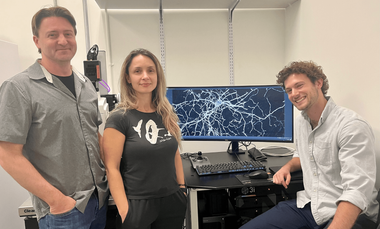
A research team led by Dr. Jonathan Epp, PhD, and Dr. Derya Sargin, PhD, at the University of Calgary, funded by Brain Canada and Women’s Brain Health Initiative (WBHI), has identified a potentially promising target for new Alzheimer’s disease treatments. The results were recently published in Science Advances.
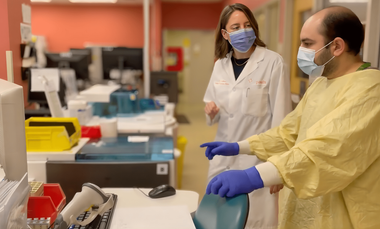
In 2021 we reported on the progress of Dr. Mari DeMarco’s IMPACT-AD project funded in part by Brain Canada, which was evaluating the implementation of a comprehensive biomarker testing strategy for Alzheimer’s disease.