For every $1 we spend in seed funding through the Future Leaders in Canadian Brain Research program, Future Leaders will attract an additional $7.75 to build on their findings.
For every $1 we spend in seed funding through the Future Leaders in Canadian Brain Research program, Future Leaders will attract an additional $7.75 to build on their findings. Since 2019, the Future Leaders program has supported 131 promising early career researchers with $100,000 each to pursue bold ideas, advance their research programs, and launch their careers. This seed funding has allowed Future Leaders to:
Something remarkable happens when a 22-year-old and a 75-year-old stand side by side rolling dough or tossing a Thai-inspired salad. Conversation flows. Memories surface. Skills are exchanged. That, in essence, is the premise and growing proof behind Cooking Together, an innovative multi-week intergenerational cooking and nutrition program.
Celebrating the impact of Future Leaders seed funding
For every $1 we spend in seed funding through the Future Leaders in Canadian Brain Research program, Future Leaders will attract an additional $7.75 to build on their findings. Since 2019, the Future Leaders program has supported 131 promising early career researchers with $100,000 each to pursue bold ideas, advance their research programs, and launch their careers. This seed funding has allowed Future Leaders to:
The brain influences the heart; emotional states like sadness and joy can influence heart rhythms and blood pressure. And the heart sends signals back to the brain through nerves and hormones, affecting things like mood, attention, and stress levels.
In 2016, Yasser Iturria-Medina, Ph.D., and his post-doctoral supervisor at the time, Alan Evans, Ph.D., published findings that quietly helped shift how scientists think about Alzheimer’s disease. Today, that work has informed several therapeutic patents and opened the door to a distinct class of drug targets currently being tested on patients around the world.
As part of our mission to fund bold brain research, Brain Canada has, together with its donors and partners, supported dozens of large-scale research projects and platforms to develop and apply cutting-edge AI approaches to advance our understanding of the brain and identify solutions for brain diseases and disorders.
Dr. Sylvia Villeneuve is accelerating research on Alzheimer’s across the globe. By sharing comprehensive data from preclinical Alzheimer’s disease (AD) patients, the Canadian Alzheimer’s Prevention Data Repository and Sharing (CAP) platform, headed by Villeneuve, is bolstering research studies across hundreds of research groups. Already, the platform is hosting data that has been used to uncover significant findings, enabling a greater understanding of the disease in its early stages – before symptoms appear.
Novel research by Aaron Phillips, associate professor at the University of Calgary, may soon drastically change the lives of those who suffer from a life-threatening and often underappreciated complication of spinal cord injury: blood pressure instability.
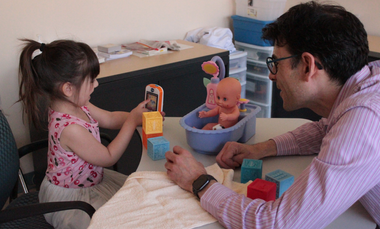
Team detects signs of early autism in at-risk infants
Autism is often perceived on a linear scale, or spectrum. Those touched by the condition know this is an over-simplification. A multi-dimensional structure influenced by differences in language, motor skills, executive functioning and sensory perceptions would perhaps be a better way to describe this complex condition, which affects nearly one million people in Canada.
Cause of sex-dependent vulnerability in Alzheimer’s
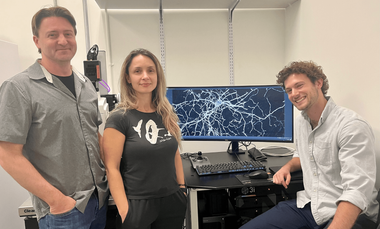
A research team led by Dr. Jonathan Epp, PhD, and Dr. Derya Sargin, PhD, at the University of Calgary, funded by Brain Canada and Women’s Brain Health Initiative (WBHI), has identified a potentially promising target for new Alzheimer’s disease treatments. The results were recently published in Science Advances.
Face drooping – Arm weakness – Speech difficulty – Time to call for help! The acronym FAST (Face-Arms-Speech-Time) is both a reminder of the early symptoms of stroke and the urgent action necessary. Acute ischemic stroke (AIS) – the most common form of stroke – occurs when a blood vessel to the brain is blocked, starving part of the brain of oxygen.
Canada has one of the largest banks of brain tissue in the world, the Douglas-Bell Canada Brain Bank, which has received longstanding platform support from Brain Canada and other partners and has achieved significant research impact.
A Brain Canada-funded platform is enabling new technology for drug discovery, in order to address a wide range of brain diseases and disorders: from epilepsy to autism, and brain tumors to ALS.