
Building a brighter future for teens with depression

Building a brighter future for teens with depression
Depression often rears its head for the very first time during adolescence and young adulthood — a period when people are building their identity, relationships, education and future. Months spent in depression during those formative years are not neutral months: the illness can interfere with development at precisely the moment when a young person needs all their emotional and physical resources to move forward.
Depression is one of the most disabling and common mental disorders in adolescence. It can put young people at risk of drug and alcohol use and affect an individual’s overall physical health. It is also one of the most important risk factors for suicide, both in youth and later in life. The cost of depression goes beyond the moment and can have long-lasting impacts on the future of an adolescent, which is why early intervention and treatment matter so much.
Whether a patient starts with antidepressant medication or psychotherapy, an effective treatment can require several attempts and take months. Being able to identify the most promising treatment earlier could shorten suffering and, for some young people, potentially reduce serious risks associated with persistent depression. Given the vulnerability of youth at this critical period of development, it’s crucial to develop an easy, reliable, and fast method to choose the best treatment course.
This is exactly why Dr. Anthony Gifuni is committed to finding accessible biological markers to help identify biological markers associated with depression severity, suicide risk and treatment response.
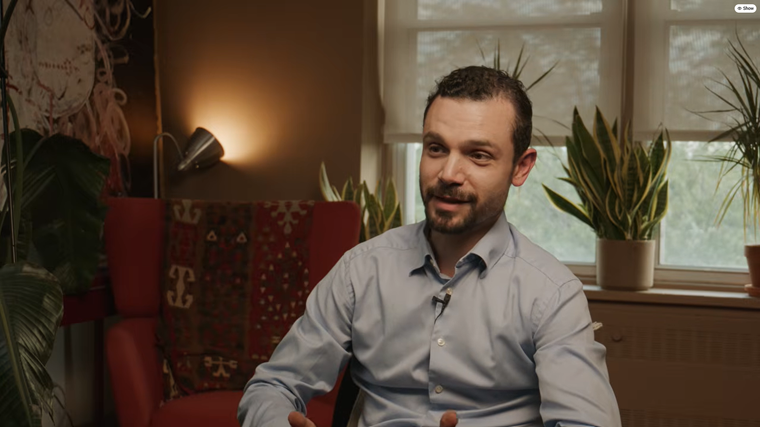
Dr. Gifuni is an assistant professor in the Department of Psychiatry at McGill University, psychiatrist and neuroscientist at the Douglas Mental Health University Institute and a recipient of a Future Leaders in Canadian Brain Research grant from Brain Canada. Using electroencephalography (EEG) technology, Dr. Gifuni and his team record brain activity while young people take part in virtual tasks that simulate social exclusion. The aim is to identify brain activity markers that may signal distinct patterns in emotional processing of different social cues, such as rejection and re-inclusion, between healthy adolescents and those experiencing their first episode of depression.
“Negative social interactions are on a spectrum, from simple rejection to bullying, victimization, and violence. These instances can have a lifelong impact on the capacity to connect in situations that involve trust, intimacy, and reciprocity. The very process of seeking treatment for depression involves building a relationship and trusting someone to offer help.”
- Dr. Anthony Gifuni
EEG technology is inexpensive, non-invasive, and far more accessible than other brain imaging tools, such as functional Magnetic Resonance Imaging (fMRI). It also captures brain activity within milliseconds after a task or a response. For young, vulnerable participants, EEG demands a lot less of them than an fMRI scan. It gives the researchers the capacity to scale their research and increase the number of patients and participants in each study. But Dr. Gifuni’s research goes beyond identifying EEG markers for high-risk depression.
Treatment for depression takes time, and improvement is not always immediately perceptible. Dr. Gifuni's team is investigating whether changes in brain activity could provide an early indication that treatment is beginning to work. Such a marker could help clinicians decide whether to continue a treatment or change course—and could give patients an objective reason to persist during a period when depression itself makes hope difficult.
“At any stage in life, depression steals pleasure and motivation, which are the very resources an individual needs to seek help and to feel better. The longer and the more depressed an individual becomes, the harder it can be for them to imagine that they can get better.”
- Dr. Anthony Gifuni
With this research, Dr. Gifuni hopes to identify brain responses that can help us better understand first instances of depression, recognize individuals at higher risk of suicide, and pursue the best potential treatment course. By using a highly scalable, inexpensive, and accessible measuring tool, the team is working tirelessly to help ensure that those most at risk have a bright and long future ahead of them.
Why donor support matters
“Research only happens when people choose to invest in it. That support allows us to train researchers, support staff, acquire equipment, recruit participants and carry out the work. But the gift goes far beyond the laboratory. Ultimately, it is a gift to people living with depression. Every investment in research sends them a message: what you are experiencing is real, it matters, and it is worth understanding. It says that we have not simply accepted depression as something people must endure. We are working to understand it, prevent it and treat it better. That is a message of hope, and I think that is extraordinarily powerful."
-Dr. Anthony Gifuni
“At The Erika Legacy Foundation, this is exactly the kind of research we are passionate about funding. Depression can be invisible, particularly in young people, and too often we recognize the danger only after someone is already in crisis. Dr. Anthony Gifuni’s research at the Douglas Institute is truly amazing. Erika Legacy believes this mix of science, research and technology is where the future of mental health must go: earlier detection, better prediction, more personalized treatment, and ultimately prevention. Research like this gives us the opportunity to find the warning signs we cannot see—and potentially intervene before a life is lost.”
- Chris Maksylewicz, Executive Director of The Erika Legacy Foundation
Don’t be afraid to ask for help. If anxiety is persistent, overwhelming or interfering with everyday life, talk to a health professional. Effective treatments, including psychotherapy and medication, are available.
If you or someone you know is thinking about suicide, call or text 9-8-8.
Funding acknowledgement:
The Future Leaders in Canadian Brain Research program is made possible thanks to an anchor gift from the Azrieli Foundation, matched by Brain Canada through the Canada Brain Research Fund (CBRF), a unique arrangement between the Government of Canada (Health Canada) and Brain Canada, with the support of additional generous donors and partners.