
While You Were Sleeping


Every night, you lose consciousness for hours. You rest, you recharge, and you dream.
But your brain is anything but idle.
While you sleep, your brain cycles through distinct stages, processing emotions, consolidating memories, regulating your breathing, heart rate, temperature and other body functions, and preparing you for the coming day.
Nadia Gosselin, Ph.D., and her team can actually watch all of this happen. “When you sleep, you have access to a window into your body’s functioning that is not possible when you are awake,” she explains.
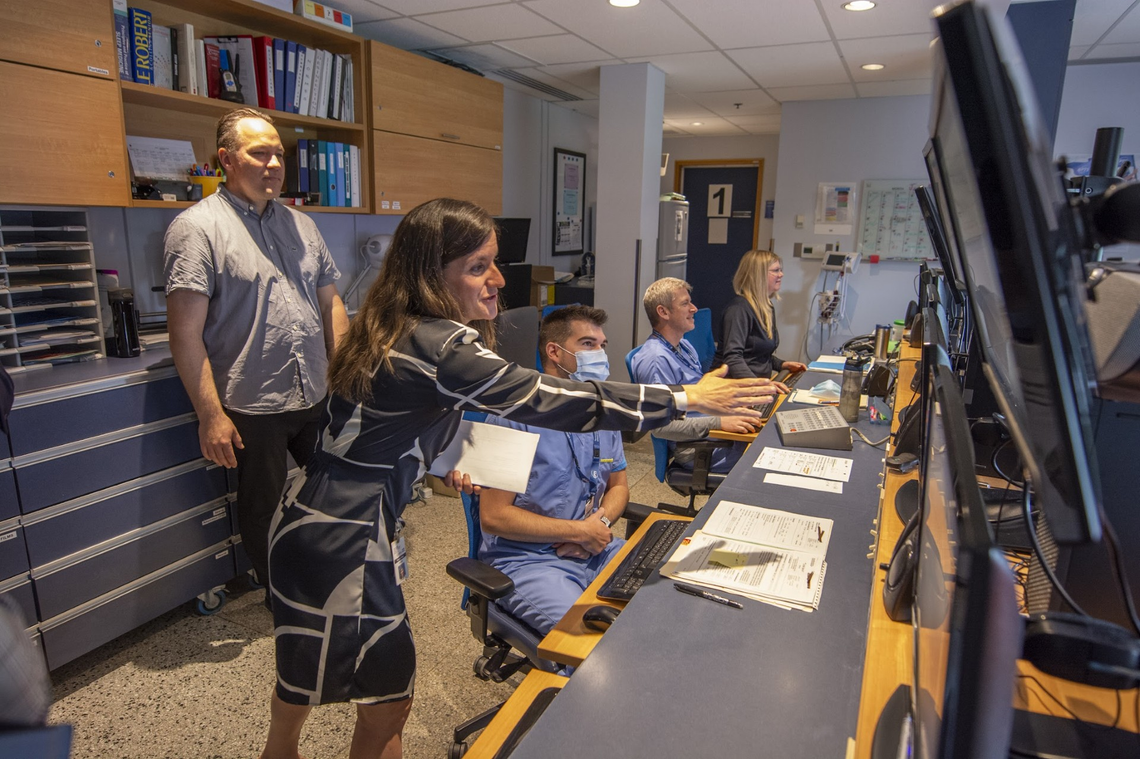
A neuropsychologist, researcher at the Santé Québec Montreal North Island Health and Social Services – University Network, and professor at l’Université de Montréal, Gosselin leads a Brain Canada-funded research platform called SLEEP HUB that studies electrical activity, breathing, heart rate, muscle activity and other signals in the sleeping brain. By gathering and synthesizing all of this data, Gosselin and her SLEEP HUB team members are uncovering what the brain is doing during sleep – and what’s happening when sleep goes wrong.
Because for many of us, sleep does go wrong. More than one in three people may have a sleep disorder or not get the recommended seven to nine hours of sleep each night. This proportion is even higher among older adults. Poor sleep is intimately intertwined with our health; sleep issues can accompany conditions ranging from depression and anxiety to dementia, and insufficient or disrupted sleep is itself associated with poorer health outcomes. Yet sleep disorders remain widely underdiagnosed and undertreated.
That’s part of what makes sleep such a rich scientific frontier. Every night, the sleeping brain and body generate an extraordinary trail of biological signals – SLEEP HUB researchers are using this data to better understand our health and, ultimately, move towards more personalized ways to diagnose and treat sleep disorders.
The Wonder: A Night in the Sleeping Brain
The sleeping brain is continually changing states, and scientists can watch those changes unfold through the brain's electrical signals. Over the course of a typical night, the brain repeatedly cycles through two major types of sleep – non-REM and REM – moving stage-by-stage through distinctive patterns of brain activity.
N1: Drifting Off
As you first drift off, your awareness of the outside world starts to fade. You might experience dream-like images, sounds, or the sudden sensation of falling, sometimes paired with a quick, involuntary body jolt known as a hypnic jerk. These are all signs that your brain is transitioning from wakefulness to sleep.
N2: Enter the Sleep Spindles
Within minutes of falling asleep, bursts of electrical activity called sleep spindles ripple through your brain. Lasting only a second or two, these rapid bursts are thought to help protect sleep from outside disturbances and play an important role in strengthening memories.
N3: Going Deep
Then comes deep sleep, when large groups of brain cells begin firing in highly synchronized slow waves. This is the hardest stage to wake from and an important period for restoring and consolidating memories. It’s also when sleep disorders such as sleepwalking, sleep talking, and bedwetting are most likely to occur.
REM: The Dreaming Brain
Finally, your brain enters rapid eye movement (REM) sleep, the stage associated with vivid dreaming. Brain activity becomes surprisingly wake-like, while most of your body's muscles are temporarily inhibited, preventing you from physically acting out your dreams. REM sleep is also linked to learning, memory, and emotional processing.
These stages repeat several times throughout the night, but not equally: deep sleep is more prominent earlier in the night, while REM periods become longer toward morning.
“We can see all of these stages on the computer screen – what’s occurring in your brain and your body in each stage and during each transition. It’s really amazing to see,”
- Dr. Gosselin.
The Mystery: What Makes “Good Sleep” Good?
“There are four elements to good sleep: enough duration, good quality, timing that aligns with your biological night, and a regular schedule.” explains Dr. Gosselin.
In other words, good sleep isn't simply eight uninterrupted hours. Adults generally need 7–9 hours; teenagers and young adults whose brains are still developing generally need more, between 8–10 hours. Here are a few other facts about good sleep:
Waking during the night isn’t a cause for stress: Sleep quality includes limited awakenings and feeling rested afterward.
Keeping the same sleep and wake times is just as important as the number of hours you sleep: In other words, catching up on weekends isn’t a solution to poor sleep.
Scrolling on social media before bed affects sleep: Avoid screens an hour before bed. Blue light can disrupt your body clock, but what you’re doing – working, scrolling or gaming – and delaying bedtime can matter just as much.
Melatonin isn’t a sleeping pill: People don’t typically lack melatonin. It can be useful for certain situations, such as jet lag, but isn't recommended for sleep challenges.
Alcohol and cannabis are not tools for better sleep. Alcohol and cannabis might help you fall asleep faster but faster isn’t better. Cannabis actually disrupts REM sleep, preventing you from dreaming.
If sleep is a persistent problem, or if you start snoring and it’s affecting your sleep, talk to a healthcare professional for support.
When Sleep Goes Wrong
There are also sleep disorders that change the way you sleep, leading to a lack of sleep or not feeling rested after sleep. The good news is, many sleep challenges can be treated or managed, even when they occur alongside other health conditions. Insomnia isn’t something to be tolerated – there are evidence-based treatments that can help.
Greg’s Experience

In his early 40s, something shifted for Greg. He was sleeping through the night – or so he thought – but waking up feeling as though he hadn’t rested at all.
“It was as if life lacked colour contrast all of a sudden,” he remembers.
Greg struggled to focus at home with his wife Monica and their three young kids. He also lacked motivation at work, where his job as a mechanical engineering draftsperson demanded the utmost precision. He started taking multiple naps throughout the day, often as early as 10am.
“I’m Colombian. Naps are part of my culture. But Greg was napping all the time. We both worried that something was seriously wrong,” says Monica.
For Greg, even family vacations became stressful. “I’d started snoring really loudly. I was so stressed knowing that I was keeping everyone up in the shared hotel room or tent,” Greg recalls.
A sleep test revealed that Greg was waking up about 20 times a night. His diagnosis: sleep apnea. Today, Greg uses a continuous positive airway pressure (CPAP) device to help keep his airway open while he sleeps. The device is smaller and less cumbersome than he’d expected, small enough to tuck into a drawer each morning.
“I can dream again. Before my dreams were like quick commercials. Now it’s as if I’m dreaming in full-length movies, in 4K resolution.”
What Was Happening – Sleep Apnea: Obstructive sleep apnea, the most common form, occurs when the upper airway repeatedly narrows or closes during sleep. It’s been described as trying to breathe through a straw. This stress can briefly arouse the brain, disrupting restorative sleep – without the person realizing it. An estimated one in five Canadians live with obstructive sleep apnea, yet many go undiagnosed. Beyond fatigue, sleep apnea is also associated with poorer mental health, including depression symptoms and psychological distress.
Sofia’s Experience

For Sofia, sleep was always a struggle. Even as a child, the slightest sound would wake her. Her Mom joked that she was a soldier in a past life – always alert, always ready. In university, her roommates were shocked by how little she slept.
“I wouldn’t sleep for days,” Sofia remembers. “I had a lot to do. I felt like I could function.”
Her struggles with sleep continued into adulthood, throughout her career in research communications.
“Then I had a baby, and I started to understand the importance of sleep. I knew I needed to change my relationship with it, because I’d been fighting sleep since I was little.”
Sofia’s experience reflects something sleep researchers are increasingly paying attention to – sleep can change dramatically across a woman’s lifespan.
“For women, sleep can be an extra challenge. Whether you’re going through pregnancy or motherhood or menopause, it’s something people don’t talk about enough. And it has such profound impacts on brain health – we need to prioritize sleep, to protect our brains, and protect our health. We need to stay informed, and we need to advocate for ourselves.”
What Was Happening – Insomnia: Short-term insomnia is common, usually lasting days or weeks, and linked to stress or a distressing event. But for 16% of Canadians insomnia is chronic, meaning it lasts three months or more. For some people, the harder they try to sleep, the harder sleep can become; worrying about sleep, spending extra time in bed, and going to bed excessively early can actually reinforce the condition. But cognitive behavioural therapy for insomnia (CBT-I) is supported by strong evidence and is recommended as a first-line treatment. It works by identifying and changing the thoughts, routines, and habits that interfere with natural sleep.
Gosselin knows firsthand that sleep can be disrupted in unexpected ways. She lives with restless legs syndrome, which causes an irresistible urge to move the legs, and makes it hard to fall asleep and stay asleep. It’s more common among women, particularly during pregnancy, postpartum, and perimenopause.
“Many people with restless legs syndrome have low iron, which can both cause and worsen symptoms. It’s definitely worth getting screened for low iron.”
- Dr. Nadia Gosselin
Other health conditions, such as anxiety, depression, traumatic brain injury, mild cognitive impairment, pain, and cancer can also worsen sleep. It’s a two-way street: health conditions can disrupt sleep, and poor sleep can make it harder for the brain and body to function at their best. For example, sleep gives your brain a chance to do some housekeeping. As you sleep, changes in the flow of cerebrospinal fluid may help flush away waste products, including proteins linked to Alzheimer's disease. Scientists are still uncovering exactly how this nighttime cleaning process works.
Sleep Access Isn’t Equal
An important caveat is that access to good sleep is unequal – work schedules, housing conditions, language, geography, income, and treatment costs are all barriers.
“For example, living near a highway, lacking air conditioning in summer, and shift work all impact access to good sleep quality. Language barriers and living in a remote region can make it harder to get diagnosed, and costs for treatments can limit access.”
- Dr. Nadia Gosselin
To address these barriers, the SLEEP HUB team is engaging diverse participants in its studies, including people traditionally underrepresented in sleep research. The team is also developing the Snooz Toolbox, an open science platform that will help sleep clinics and laboratories around the world collect, analyze, and share sleep data. By making this platform accessible in resource-limited and geographically diverse regions, the team aims to bring more populations into sleep research and build a more representative picture of sleep health. The team will also validate any tools and technologies emerging from their research in a wide range of populations, to ensure that innovations work for as many people as possible.
Canada is building a new way to study sleep
The effects of poor sleep can extend far beyond feeling tired. Over months or years, insufficient or disrupted sleep can affect cognition, mood, and health, increasing risks of mental health disorders, cognitive decline, dementia, and other brain conditions – across the lifetime.
There's still so much we don't understand about sleep and its effects on the brain. That's why research matters — and why supporting Brain Canada matters. Through Brain Canada’s unique partnership with the Government of Canada, investments in brain research are matched 1:1, helping accelerate discoveries that could transform how we understand, diagnose and treat sleep disorders.
Gosselin’s SLEEP HUB platform supported by Brain Canada and partners is developing the robust infrastructure that the research community needs to transform our understanding and treatment of sleep disorders, and protect cognitive, physical and mental health.
It’s a giant scientific window into what happens while we sleep.
One night of sleep can generate an extraordinary amount of information. Now imagine looking for patterns across thousands of nights. The SLEEP HUB brings together physiological data from more than 15,000 nights and 50,000 daytime naps, alongside more than 50,000 blood samples linked to sleep-disorder and laboratory sleep data. And Dr. Gosselin’s team is developing AI tools to analyze all of this data with both precision and ease.
“Through open science, our platform is accelerating sleep research and ultimately facilitating more accurate and nuanced diagnoses in sleep medicine.”
- Dr. Nadia Gosselin.
Gosselin didn't set out to become a sleep researcher. She was drawn in by the science, trained by leaders in the field and stayed, she says, because of the field's “family spirit.” Now, through SLEEP HUB, she's working to extend that spirit of collaboration across Canada.
Because every night, our brains are generating clues that could help researchers understand not only how we sleep, but how to keep our brains healthier throughout our lives.
Nadia Gosselin, PhD, researcher at Santé Québec Montreal North Island Health and Social Services – University Network and professor at Université de Montréal leads a team that was awarded a $2,137,500 Brain Canada Platform Support Grant in 2024 for The SLEEP HUB: an open science ecosystem for transforming sleep research. The grant was made possible with the financial support of Health Canada (through the Canada Brain Research Fund, an innovative partnership between the Government of Canada (through Health Canada) and Brain Canada) with financial support from the Santé Québec Montreal North Island Health and Social Services – University Network (NIM-U) and the Montreal Sacré-Cœur Hospital Foundation.