
CABHI and Brain Canada partner to transform research into real-world brain health solutions that improve older persons’ mental health and prevent dementia

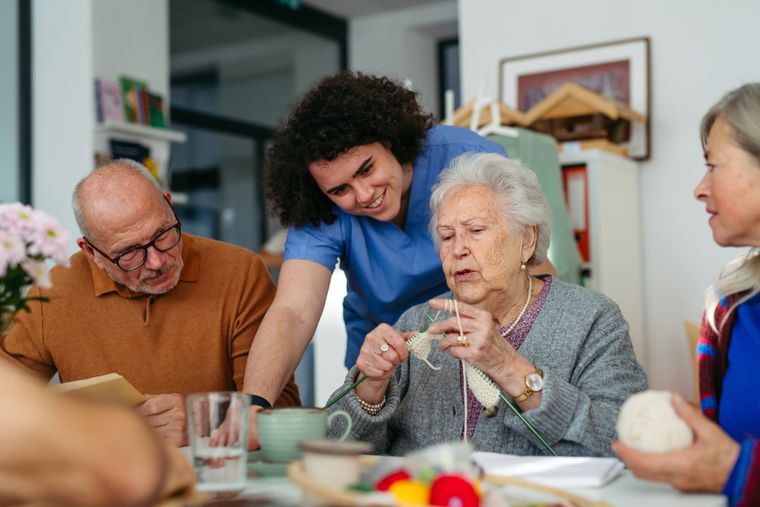
Brain Canada and CABHI launch new Knowledge Mobilization Grants to accelerate the application of evidence into mental health practices that benefits older Canadians.
Leading-edge research in mental health and brain health will soon be translated more quickly into evidence-based tools, resources, programs, and solutions that directly improve the lives of older persons—including those living with dementia.
Brain Canada and the Centre for Aging + Brain Health Innovation (CABHI, powered by Baycrest), two leading national organizations driving the advancement and real-world application of brain health research, are partnering to launch a new funding opportunity designed to speed up the translation of proven research into products that improve older Canadians’ brain health and quality of life. It often takes longer than ten years for research to transform into solutions that people can actually use to stay healthy, active and connected as they age.
"Mental health is essential to healthy aging and to maintaining quality of life as we grow older. Through this investment, we are closing the gap between research and real-world care by supporting practical, evidence-informed solutions that will improve mental health and well-being for older Canadians, as well as strengthening supports for those who care for them. This will help more people age with the dignity, care and support they deserve.”
- The Honourable Marjorie Michel, Minister of Health
As of this year, Canada’s population is super-aged, with one in five people over the age of 65.
Dementia cases are similarly on the rise, expected to reach 1.7 million by 2050, at an annual cost to Canadians of $110 billion.
The growing urgency to prepare healthcare and long-term care systems, support care partners, and extend older persons’ healthspan (the length of time people are able to live healthy, active lives) requires that proven brain health research be more quickly and efficiently translated into the real-world, where it can be used to detect, prevent, treat and provide care for dementia.
“Canada has generated valuable evidence about supporting mental health and well-being in later life, but too much of that knowledge is not reaching those who need it most,” says Viviane Poupon, President and CEO of Brain Canada. “Knowledge mobilization is essential to realizing the full impact of research. Through our program, we are helping ensure that evidence reaches the practitioners, care partners, organizations, and communities that can use it to improve the lives of older persons.”
Research shows that mental health is a critical component of healthy aging, with a direct impact on a person’s risk of developing dementia. The 2026 Knowledge Mobilization Grants: Mental Health of Older Persons, funded by both Brain Canada and CABHI, will support projects that address key areas of mental health, including early identification and response to common challenges faced by older persons, advancing preventive and community-based approaches that enhance well-being and quality of life, and strengthening supports for family caregivers and care partners.
“Canada’s super-aged status is a pivotal moment in our history,” says Dr. Allison Sekuler, President and Chief Scientist of CABHI and Baycrest Academy for Research and Education. “We need to act quickly to turn ideas into real-world impact that protects our brain health, strengthens our economy, and supports care partners in our new reality.”
“The true potential of research to transform how we detect, prevent, treat and provide care for dementia is only unlocked when we move it out of the lab and into the real world. These new grants will enable Canadian researchers to turn evidence into practical solutions faster, so that care providers, older persons and caregivers can benefit from them now, not years from now when it may be too late.”
A defining feature of the program is its emphasis on collaboration, not only with Brain Canada and CABHI’s expertise and resources, but also with end users. Funded teams will be expected to work closely with the people who will ultimately use their knowledge products, including healthcare providers, policymakers, care partners, community organizations, and older persons themselves, to ensure solutions are relevant, accessible, and sustainable.
Through the Canada Brain Research Fund (Brain Canada’s partnership with the Government of Canada through Health Canada) and CABHI (with funding through Innovation, Science and Economic Development Canada’s Strategic Science Fund and the Government of Ontario), the two organizations have jointly committed $300,000 to support up to four projects. The one-year grants will fund initiatives focused on developing new knowledge mobilization outputs, increasing the reach of existing evidence-based resources, or implementing research findings in practice settings where they can drive measurable change.
Other funding opportunities