Team detects signs of early autism in at-risk infants
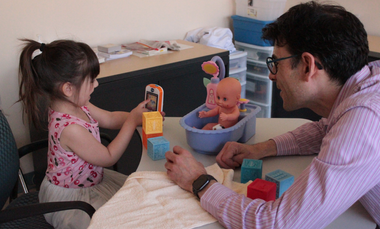
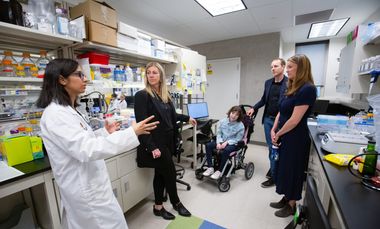
Autism is often perceived on a linear scale, or spectrum. Those touched by the condition know this is an over-simplification. A multi-dimensional structure influenced by differences in language, motor skills, executive functioning and sensory perceptions would perhaps be a better way to describe this complex condition, which affects nearly one million people in Canada.
Cause of sex-dependent vulnerability in Alzheimer’s
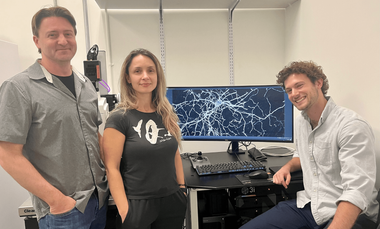
A research team led by Dr. Jonathan Epp, PhD, and Dr. Derya Sargin, PhD, at the University of Calgary, funded by Brain Canada and Women’s Brain Health Initiative (WBHI), has identified a potentially promising target for new Alzheimer’s disease treatments. The results were recently published in Science Advances.
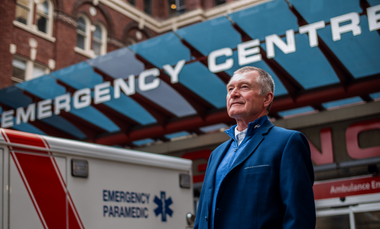
Face drooping – Arm weakness – Speech difficulty – Time to call for help! The acronym FAST (Face-Arms-Speech-Time) is both a reminder of the early symptoms of stroke and the urgent action necessary. Acute ischemic stroke (AIS) – the most common form of stroke – occurs when a blood vessel to the brain is blocked, starving part of the brain of oxygen.
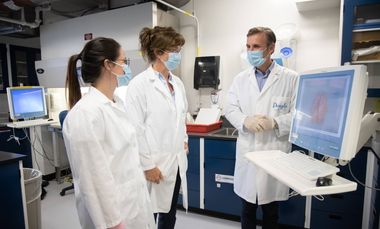
Canada has one of the largest banks of brain tissue in the world, the Douglas-Bell Canada Brain Bank, which has received longstanding platform support from Brain Canada and other partners and has achieved significant research impact.
A Brain Canada-funded platform is enabling new technology for drug discovery, in order to address a wide range of brain diseases and disorders: from epilepsy to autism, and brain tumors to ALS.
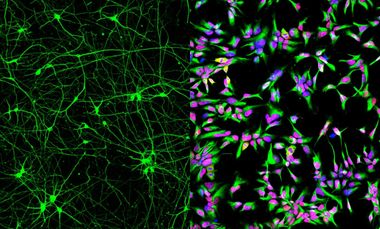
A Canadian research team, based in Montreal and Halifax, is using sophisticated stem cell technology to uncover the causes of bipolar disorder, develop new ways to screen for it, determine who will respond to treatment, and begin to identify new drug therapies.
Canadian researchers are testing an innovative app-based therapy for postpartum depression and anxiety, and measuring whether improvements in a mother’s mental health result in changes to her child’s developing brain.
AI tool improves treatment for depression and anxiety
An AI-powered smart-phone app that enables doctors to monitor their patients’ symptoms, and their response to medication between appointments, shows promise as a new tool in the treatment of depression and anxiety, according to a recent research study.
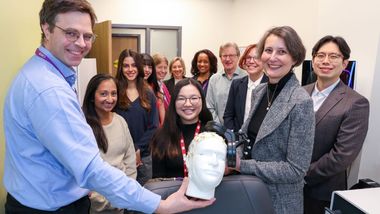
Scientists at the Centre for Addiction and Mental Health (CAMH) in Toronto are set to test a novel approach to transcranial magnetic stimulation that may better organize the brain to relieve symptoms of depression, and possibly reduce the long-term risk of dementia.
Non-invasive brain stimulation to knock out depression
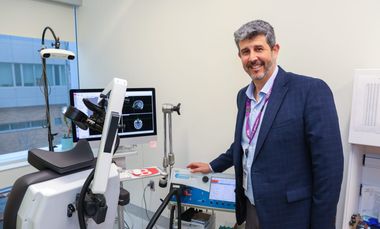
A major clinical trial of accelerated theta-burst brain stimulation, funded by Brain Canada and Bell Let’s Talk, holds the promise of potentially easing the debilitating symptoms of treatment-resistant depression within a week.
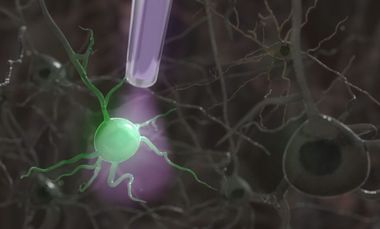
Imagine a neurosurgeon using light or sound to manipulate specific cells in your brain and restore your brain health. Instead of implanting electrodes and buzzing broader areas of your brain to help relieve symptoms of Parkinson’s disease, for example, a neurosurgeon would use gene therapy to deliver light-sensitive proteins into specific brain cells affected by the disease and use light to stimulate only those cells.
Basic discovery brings hope to those facing eating disorders
A fundamental research discovery from a 2012 Brain Canada MIRI grant is now bringing relief to patients living with an eating disorder, which has the highest mortality rate of any psychiatric disease after substance use.