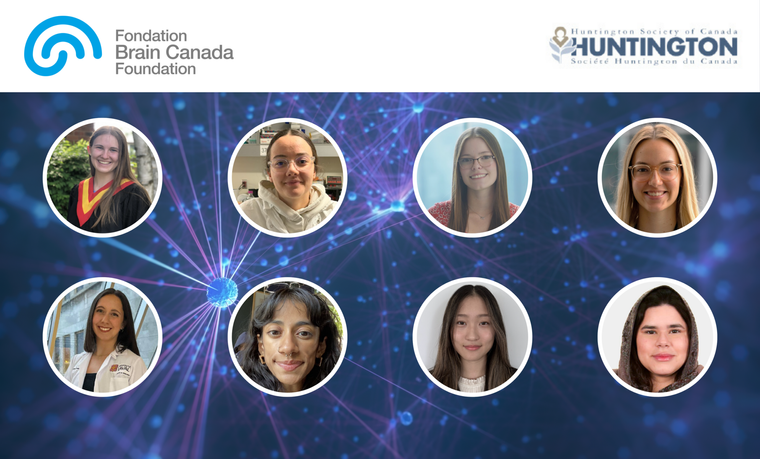
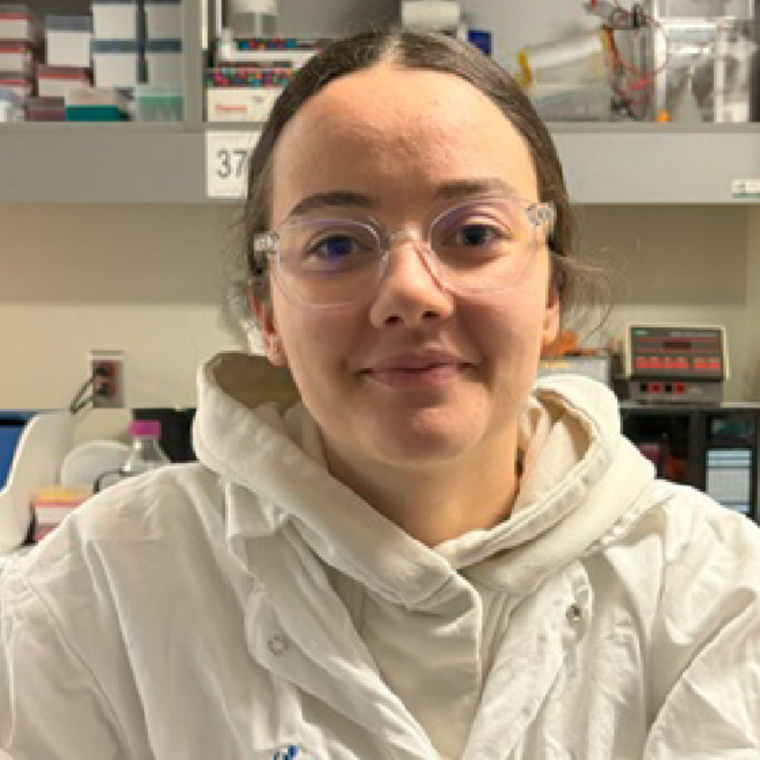
Eight Undergraduate Students across Canada are receiving fellowships through Brain Canada and the Huntington Society of Canada.
The 2025 Undergraduate Student Fellowships is a program designed to attract the brightest young scientists into the field of Huntington disease research and to facilitate meaningful research to clarify the biological mechanisms underlying Huntington disease pathology.
Huntington disease is a hereditary, neurodegenerative illness with physical, cognitive and mental health symptoms. It is caused by a mutation in the gene that makes the protein called huntingtin. To date, there are no drugs to slow or stop the progression of Huntington disease; however, there are specific drugs available to reduce some of the symptoms. Research is being conducted in Canada and globally to find promising treatments and approaches to treating Huntington disease.
“We are thrilled to be supporting these undergraduate students in their efforts to contribute to research that meaningfully impacts those living with Huntington Disease. In continuing our work with the Huntington Society of Canada, Brain Canada hopes to move towards a future without Huntington disease.”
Dr. Viviane Poupon, President and CEO of Brain Canada
The Fellowships offer undergraduate university students across Canada the opportunity to pursue an Huntington disease research project that can be conducted over a 12-week period, between May and September. Fellowship recipients, working under the supervision of senior Huntington disease scientists, will undertake a project that is focused and achievable in a short timeframe, yet helpful in guiding future Huntington disease research.
“We are proud to partner with Brain Canada to offer these fellowships aimed at fostering curiosity and inspiring the next generation of researchers committed to improving the lives of people affected by Huntington disease”
Shelly Redman, CEO of the Huntington Society of Canada
Introducing the 2025 recipients:
Brianna Adams
Memorial University, St. John’s, Newfoundland
Synaptic Activity as a Driver of DNA Damage and Somatic Expansion in Huntington’s Disease
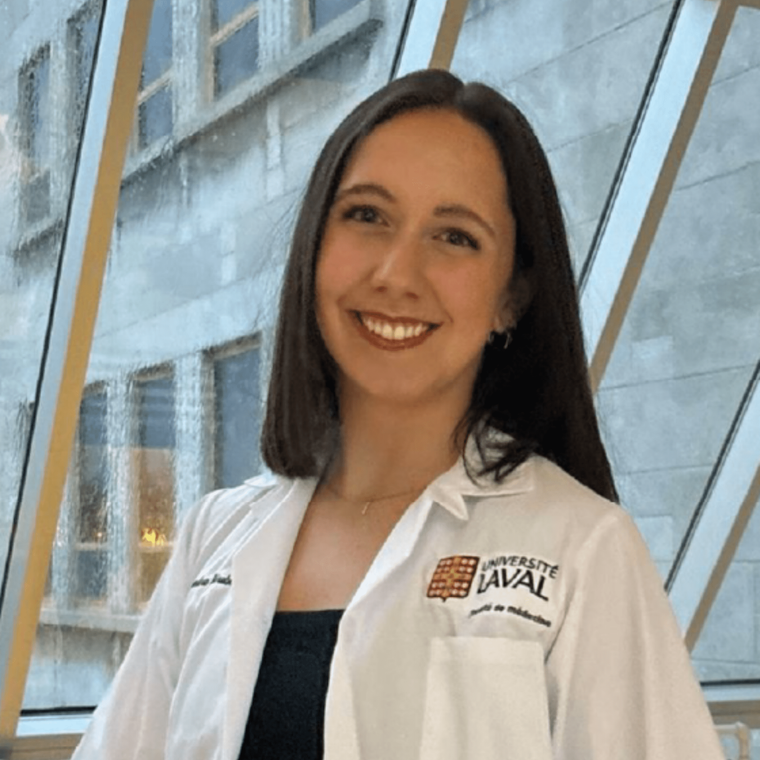
Alexandra Bérubé Ebacher
Université Laval, Québec City, Québec
Shedding light on the huntingtin protein
Isabella Bu
University of Western Ontario, London, Ontario
Investigating S-Nitrosylation of MCUB in Mitochondrial Calcium Dysregulation and Huntington’s Disease
Maya Klepfish
McMaster University, Hamilton, Ontario
The use of AI generated peptides with the CK2 Kinase Catalytic Domain to Restore Huntingtin N17 Phosphorylation
Yusra Kureshi
University of Waterloo, Waterloo, Ontario
Optimizing nanodiscs to improve antisense oligonucleotide delivery in the treatment of Huntington disease
Christiana Lammers
University of Guelph, Guelph, Ontario
Evaluating DLK activity in brain samples from Huntington’s disease patients
Shannon Pulido
Memorial University, St. John’s, Newfoundland
Synaptic Activity as a Driver of DNA Damage and Somatic Expansion in Huntington’s Disease
Fatma Slim
University of Ottawa, Ottawa, Ontario
Vascular innervation and blood-brain barrier dysfunction in Huntington’s disease using human iPSC-derived vascularized brain organoids.