
Research Brings Relief: rTMS Access Expanded Across Ontario

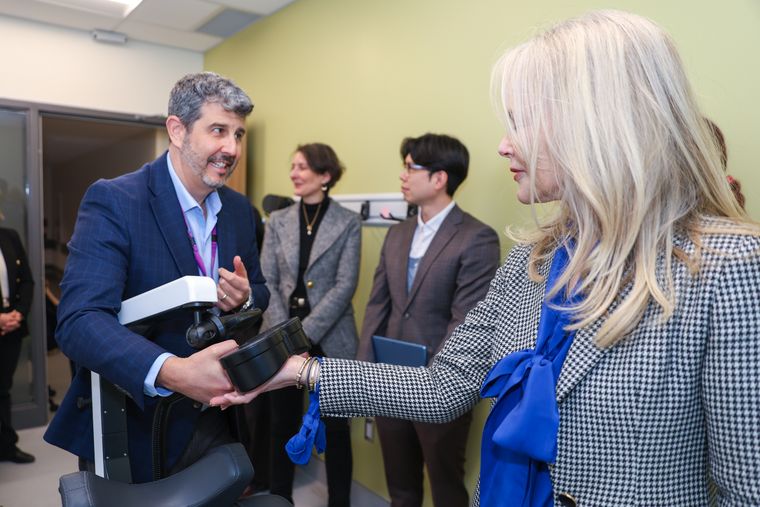
PHOTO: Dr. Daniel Blumberger, a psychiatrist and researcher at Toronto's Centre for Addiction and Mental Health, demonstrates non-invasive brain stimulation treatment for depression.
How Years of Research Changed the Standard of Care for Treatment-Resistant Depression
For many people living with treatment-resistant depression – whose symptoms have not improved with antidepressant medications or psychotherapy – repetitive transcranial magnetic stimulation (rTMS) can be life-changing.
Some describe it as a fog finally being lifted. Some say it’s like their eyes have opened. Others describe feeling like themselves again.
But in many parts of the country, access to rTMS has been limited, available via research studies or a few specialized hospital programs.
That changed earlier this month in Ontario, where a publicly funded rTMS program was launched to integrate rTMS into standard care for adults with treatment-resistant depression.
Supporting 18 rTMS devices at 15 sites across Ontario, the program will help up to 2,250 people living with treatment-resistant depression access care each year.
This milestone is the result of years of Canadian research that transformed rTMS from a promising experimental therapy into an evidence-based treatment now entering routine care.
“Offering rTMS more broadly across Ontario reflects years of collaboration, innovation, and a shared commitment to improving care for patients with depression and will allow many more people to access a treatment that is safe, effective, and grounded in decades of neuroscience research", says Dr. Daniel Blumberger, a Brain Canada-funded researcher based at the Centre for Addiction and Mental Health (CAMH), which is supporting the implementation of the new program
“This idea of a provincial network is exactly what should happen across Canada," explains Dr. Fidel Vila-Rodriguez, a Brain Canada-funded researcher based at the University of British Columbia.
“That’s exactly what's happening in Alberta, and to some extent in Saskatchewan and Quebec. That's what I hope we’ll be able to do in BC. It's the right way to set it up: establish standards for training, for the most up to date treatment protocols, and establish a network where the information flows and people learn from each other, to maximize the number of people that can be treated.”
Building the Evidence for rTMS
During rTMS treatment, patients stay awake while a device placed against the scalp delivers magnetic pulses to targeted areas of the brain. Sessions are brief (between 3-30 minutes long), require no anesthesia, and patients can return to their normal activities immediately afterward.
Research shows that 50 per cent of patients see a meaningful improvement in symptoms, and up to 30 per cent achieve remission, meaning their symptoms are mostly resolved after treatment.
Ontario's decision to expand access to rTMS didn't happen overnight. This policy change reflects more than a decade of research.
Brain Canada has invested almost $9 million to advance research on TMS since 2011. These investments have helped answer a series of critical questions:
Is rTMS safe? Does it work?
The CARTBIND trial led by Dr. Jeff Daskalakis was one of the first Brain Canada-funded grants focused on rTMS. Results from the trial supported the safety of rTMS as a form of treatment and established the effectiveness of delivering the therapy once daily.
Where should rTMS target the brain?
Research by Platform Support Grant recipient Dr. Fidel Vila-Rodriguez used fMRI brain imaging to explore what happens to the brain when a person receives rTMS treatment for depression. He and his team identified the optimal brain target for treatment, the prefrontal cortex, laying the foundation for many clinical trials now evaluating the optimal delivery of this therapy in people living with depression and anxiety.
How does rTMS work?
MD/PhD candidate Elizabeth Gregory, a Rising Stars grant recipient in Dr. Vila-Rodriguez’ lab at UBC, helped identify the brain circuits involved in rTMS response. Using heart rate variability to measure how the treatment affects the brain, her research identified the insula as a potential key region involved in treatment response.
Can it be delivered faster?
Ongoing research led by Dr. Daniel Blumberger, funded by Brain Canada in partnership with Bell Let’s Talk, is pioneering intermittent theta-burst stimulation (iTBS) for clinical use. iTBS is a form of rTMS that uses a different pattern of stimulation and takes about three minutes per session, instead of 20 or 30 minutes using the standard approach. So far the results are promising – this treatment could potentially ease the debilitating symptoms of treatment-resistant depression within a week. A typical course of rTMS treatment involves five sessions per week over six weeks, for a total of 30 sessions. A fast-tracked treatment would be particularly beneficial “in countries like ours where people travel great distances to get their health care. This approach could shorten the number of visits to the clinic to a week instead of six weeks,” adds Dr. Daniel Blumberger.
Can it promote brain repair?
Momentum grant recipient Sara Tremblay, PhD and her team at the Royal are investigating how a full week of accelerated brain stimulation changes the brain's ability to form new connections. Using advanced brain imaging, they’re linking these changes to improvements in depression symptoms and in the process, developing a better understanding of how accelerated treatment can promote brain recovery.
A Treatment That Changed Someone’s Life
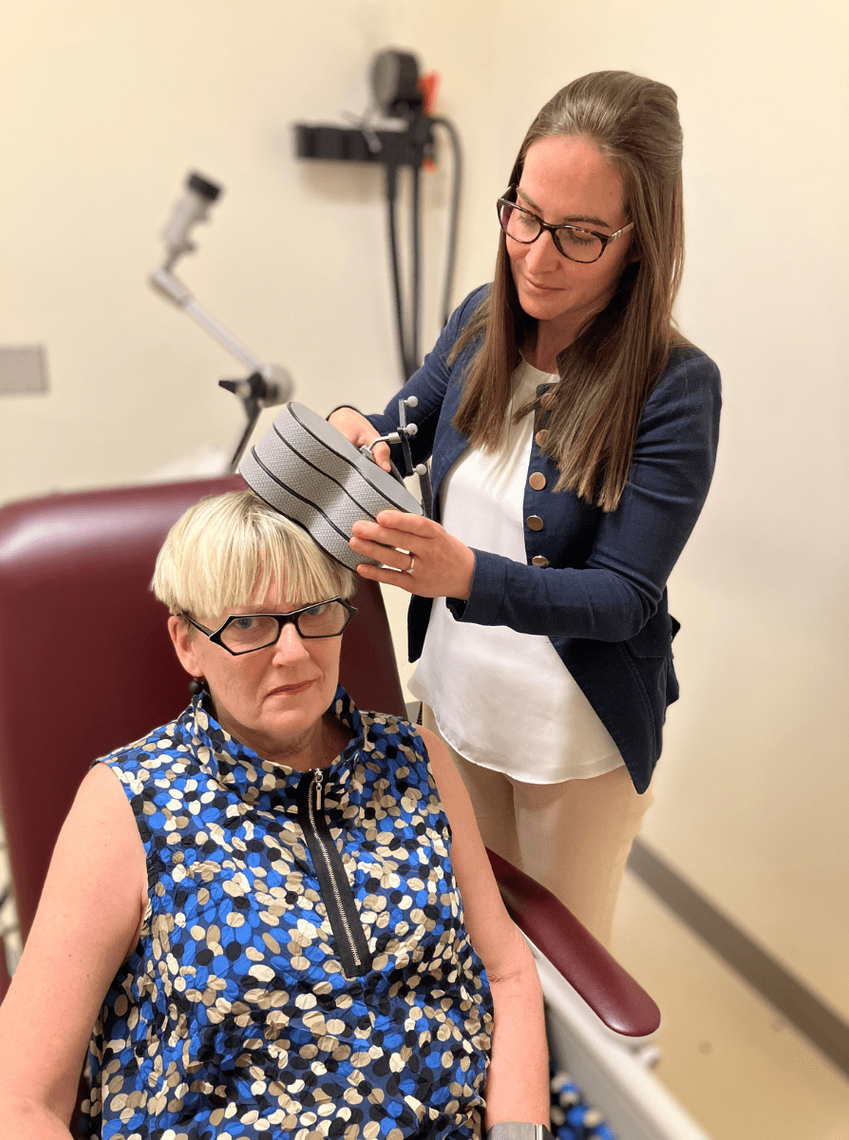
For years, Raija Hilska lived with the weight of bipolar depression. Despite trying numerous medications, she often struggled with deep depression and anxiety.
“I would always say, 'I can't trust tomorrow. Who knows what my mood will be?’” she recalls. During the COVID-19 pandemic, her symptoms worsened, and she began searching for another option.
That option came through Brain Canada-supported research at The Royal, where Future LeaderSara Tremblay, PhD and her team were investigating whether rTMS could modulate brain circuits involved in mood.
Within a week of starting daily three-minute treatments, Raija noticed a profound change.
"I started feeling different for the first time ever. I felt like my eyes had opened."
Rewiring the Depressed Brain with rTMS
When a person is facing depression, especially when medications haven’t brought them relief, three key brain networks have fallen out of balance.
The central executive network: Helps us plan, focus, and engage with the outside world, is underactive.
The default mode network: Turns on when our minds wander inward, is overactive — in depression, this can fuel constant self-criticism, worry, and hopeless rumination.
The salience network: Acts like a spotlight to tell us what to pay attention to, is struggling to shift the brain out of this inward, negative state.
TMS is a non-invasive way to reset these circuits. Brief, targeted magnetic pulses on the scalp to gently stimulate the parts of the brain involved in mood and thinking. Over repeated sessions, this stimulation helps these networks “re-learn” healthier patterns of communication and restores the balance between them: rumination eases, attention and motivation improve, and many people find relief from symptoms that resisted other treatments.
Researchers now understand how this relief, or eyes opening as Raija described it, occurs. Dr. Vila-Rodriguez, Future Leader Dr. Tamara Vanderwal, and colleagues used fMRI to show that TMS temporarily disrupts connectivity across the three major brain networks, and that the magnitude of changes to connectivity predicted which patients would improve after four weeks of treatment. Changes involving the brain's salience network were a particularly strong indicator of treatment response.
What’s Next: rTMS for Substance Use Disorders
Researchers are now asking whether the same approach that transformed treatment-resistant depression could help other conditions driven by dysfunctional brain circuits.
At Red Fish Healing Centre in B.C., a specialized inpatient program for people with both serious mental illness and substance use challenges, Dr. Vila-Rodriguez and colleagues have adapted an accelerated rTMS protocol: 30 treatments delivered over just 10 days. Drawing on what they learned with treatment-resistant depression, the team is targeting brain areas involved in craving and compulsion.
Clinicians have been struck by how many patients seem to benefit, across different substances, including stimulants, opioids and others. This result suggests that rTMS may be addressing a shared “craving circuit” in the brain.
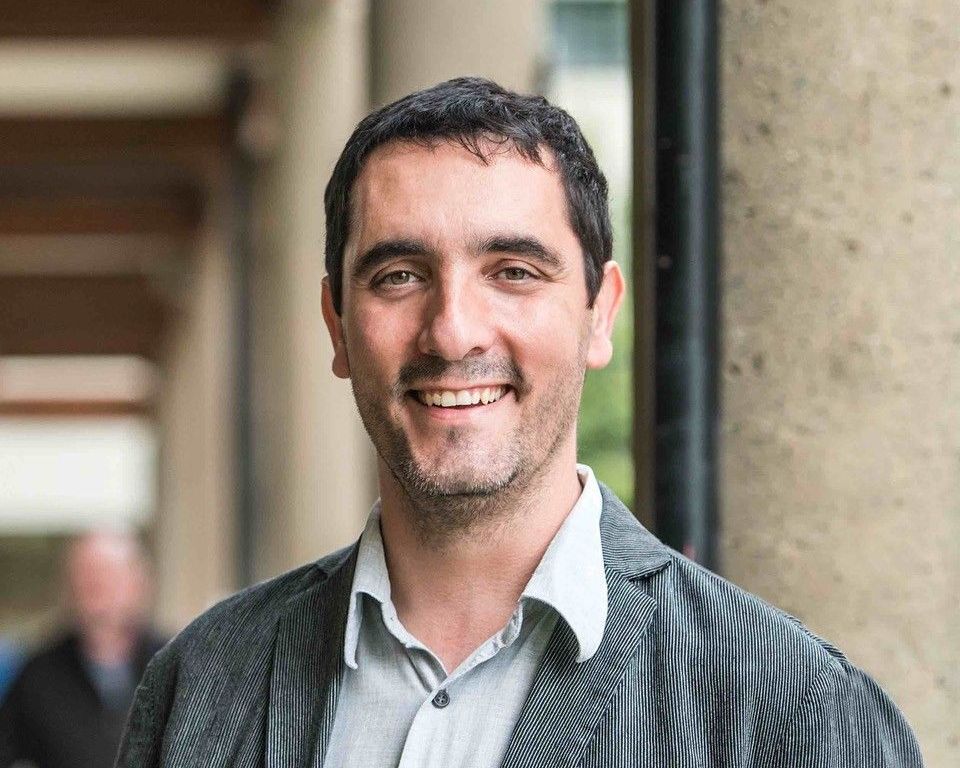
“To me, the punchline here is – it works across substances and substance use disorders because the mechanism modulates areas that deal with cravings.”
- Dr. Fidel Vila-Rodriguez
The next step is to rigorously test these results. Dr. Vila-Rodriguez and the Red Fish Healing Centre team are seeking funding for pilot studies and controlled clinical trials to measure how much rTMS can reduce cravings, prevent relapse, and improve recovery in people whose substance use and mental health challenges are among the most complex in our system. Just as rTMS has moved from promising research to standard care for depression, researchers hope it may one day do the same for substance use disorders as well.
“This is exactly why Brain Canada invests in bold, innovative research,” explains Viviane Poupon, Brain Canada President and CEO. “We're incredibly proud to have supported the scientists advancing rTMS in Canada, and to see that work help shape policy that is improving access to care and bringing new hope to people living with mental health challenges.”