Meet Antoine: The Brain Canada Rising Star Using a Ketogenic Diet to Fight ALS
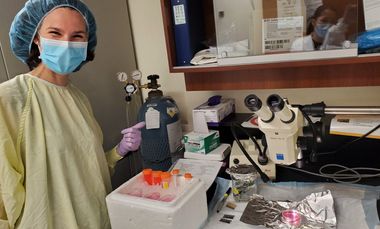
Antoine is a graduate student at Université Laval, where he is testing whether a high-fat ketogenic diet can rewire energy metabolism in ALS, potentially slowing the disease by improving the health of our brain cell’s powerhouse – the mitochondria.
For advocates like Kris and for many Canadians living with Amyotrophic Lateral Sclerosis (ALS) and their families, research represents hope: for more time, better quality of life, and one day, a cure. This ALS Awareness Month, we’re reflecting on Brain Canada’s ALS research funding journey and the discoveries, talent, and momentum it has helped create over the past decade.
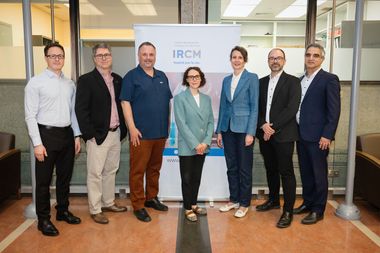
Montréal, QC — June 1, 2026 — Montréal is strengthening its position as a major brain research hub with four new Brain Canada–supported platforms advancing treatment discovery across a wide range of neurological disorders.
Brain Canada and ALS Society of Canada (ALS Canada) are proud to announce six Canadian research teams receiving funding through the 2025 ALS Canada–Brain Canada Discovery Grants, a $1.5 million investment supporting projects designed to deepen scientific understanding of amyotrophic lateral sclerosis (ALS) and accelerate the development of potential treatments.
The 2025 Clinical Research Fellowship and Trainee Awards
Brain Canada and The ALS Society of Canada (ALS Canada) are proud to announce the recipients of the 2025 ALS Canada–Brain Canada Clinical Research Fellowship and Trainee Awards.
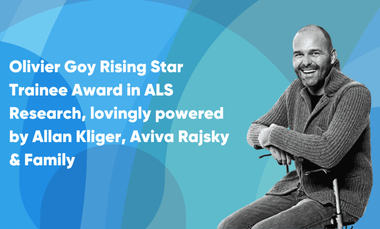
In 2020, Olivier Goy, an entrepreneur, activist and photography lover from France, was diagnosed with amyotrophic lateral sclerosis (ALS) – a rare neurodegenerative disease that can have many different underlying causes, presentations, and prognoses. Some patients may live with the disease for decades, while others decline rapidly.
Could a ketogenic diet slow the progression of ALS?
“Increase your caloric intake.” This is the number one recommendation that a clinician will make to a person recently diagnosed with Amyotrophic Lateral Sclerosis (ALS), a neurodegenerative disease affecting nerve cells in the brain and spinal cord, causing loss of muscle control. A high calorie diet is linked to better outcomes for ALS patients, but the question is – why? And what is the optimum diet to slow progression of the disease?
Reprogramming cells to replace neurons damaged by ALS?
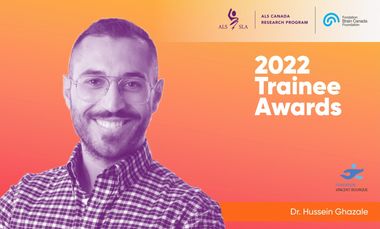
Meet the junior researchers behind the 2022 ALS Canada – Brain Canada Trainee Awards. Dr. Hussein Ghazale is the recipient of a $165,000 ALS Canada – Brain Canada 2022 Trainee Award.
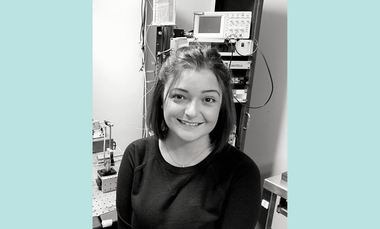
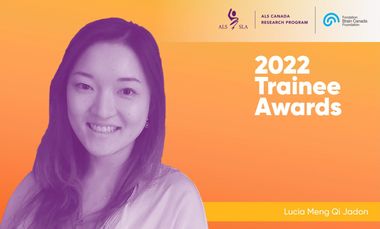
Meet the students who received the 2022 ALS Canada – Brain Canada Doctoral Awards. PhD student Lucia Meng Qi Jadon (previously Liao) is the recipient of a $75,000 ALS Canada – Brain Canada 2022 Trainee Award. She will use the funding to investigate whether a newly discovered tag on TDP-43 might have an important role to play in ALS.
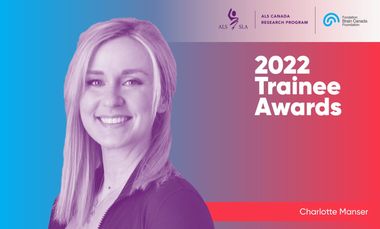
Meet the students behind the 2022 ALS Canada – Brain Canada Trainee Awards. Charlotte Manser is the recipient of a $75,000 ALS Canada – Brain Canada 2022 Trainee Award. As a PhD student at the University of Ottawa, she investigates how ALS-linked genes might contribute to the loss of normal stress granule formation.