Research Brings Relief: rTMS Access Expanded Across Ontario
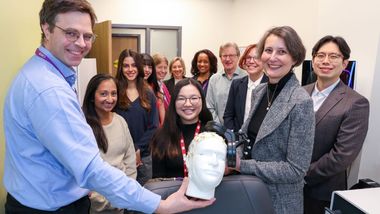
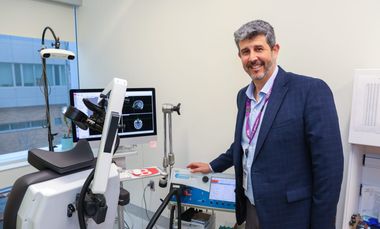
For many people living with treatment-resistant depression – whose symptoms have not improved with antidepressant medications or psychotherapy – repetitive transcranial magnetic stimulation (rTMS) can be life-changing. Some describe it as a fog finally being lifted. Some say it’s like their eyes have opened. Others describe feeling like themselves again.
Ontario is reinforcing its leadership as a centre of excellence in brain research, with four new Brain Canada–supported platforms that will accelerate discoveries and improve care for people living with neurological disease, mental illness, and childhood brain conditions.
With a Future Leaders in Canadian Brain Research grant, Dr. Mushquash and her team recruited 160 youth to participate in a trial of JoyPop, a smartphone app designed to support emotional resilience and manage adversity. The app was developed by researchers at McMaster University in consultation with researchers, clinicians, youth service providers, and victim services.
Canada has one of the largest banks of brain tissue in the world, the Douglas-Bell Canada Brain Bank, which has received longstanding platform support from Brain Canada and other partners and has achieved significant research impact.
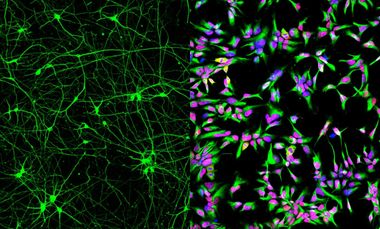
A Canadian research team, based in Montreal and Halifax, is using sophisticated stem cell technology to uncover the causes of bipolar disorder, develop new ways to screen for it, determine who will respond to treatment, and begin to identify new drug therapies.
AI tool improves treatment for depression and anxiety
An AI-powered smart-phone app that enables doctors to monitor their patients’ symptoms, and their response to medication between appointments, shows promise as a new tool in the treatment of depression and anxiety, according to a recent research study.
Canadian researchers are testing an innovative app-based therapy for postpartum depression and anxiety, and measuring whether improvements in a mother’s mental health result in changes to her child’s developing brain.
Scientists at the Centre for Addiction and Mental Health (CAMH) in Toronto are set to test a novel approach to transcranial magnetic stimulation that may better organize the brain to relieve symptoms of depression, and possibly reduce the long-term risk of dementia.
Non-invasive brain stimulation to knock out depression
A major clinical trial of accelerated theta-burst brain stimulation, funded by Brain Canada and Bell Let’s Talk, holds the promise of potentially easing the debilitating symptoms of treatment-resistant depression within a week.
Basic discovery brings hope to those facing eating disorders
A fundamental research discovery from a 2012 Brain Canada MIRI grant is now bringing relief to patients living with an eating disorder, which has the highest mortality rate of any psychiatric disease after substance use.