Brain Canada and Brain Changes Initiative recently announced $1.1 million in funding for new brain research in Canada through the Innovation Grants for Research Impact in Traumatic Brain Injury program. Two of the three recipients are focusing on an area of research that has emerged over the last decade: traumatic brain injury (TBI) related to intimate partner violence (IPV).
Clinical trial to help children recover from brain cancer
A pilot project funded through a W. Garfield Weston Foundation – Brain Canada Multi-Investigator Research Initiative (MIRI) grant in 2012 proved the feasibility of repairing brain injuries in children caused by radiation treatment. Now, the team is running a phase three clinical trial to test the efficacy of repurposing metformin, a drug widely used to treat diabetes and metabolic disorders in children, at a larger scale to improve outcomes in children recovering from brain cancer.
In 2021 we reported on the progress of Dr. Mari DeMarco’s IMPACT-AD project funded in part by Brain Canada, which was evaluating the implementation of a comprehensive biomarker testing strategy for Alzheimer’s disease.
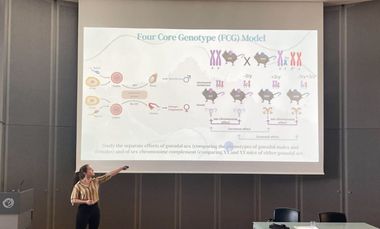
There are many neurological and neuropsychiatric diseases that affect men and women differently, but we don’t have a clear picture as to why. One factor that may be important is the influence of hormones during puberty, which can change the way in which genes are used by brain cells, affecting their function.
There are many neurological and neuropsychiatric diseases that affect men and women differently, but we don’t have a clear picture as to why. One factor that may be important is the influence of hormones during puberty, which can change the way in which genes are used by brain cells, affecting their function.
According to data collected by Public Health Agency of Canada, approximately 878,500 Canadian adults over the age of 20 have experienced a Stroke, a sudden loss of brain function caused by a brain blood vessel blockage or rupture.
Approximately 1 in 5 adolescents who report having a Brain Injury experience persistent and long-lasting emotional and behavioural challenges. The reasons why have been difficult to tease apart – until recently. Future Leader, Dr. Anne Wheeler and her research team studied pre- and post-concussion data from male and female children.
A growing number of kids’ brains have likely been spared injury thanks to enhanced safety guidelines informed by a large-scale Brain Canada-funded research platform. A series of studies made possible by the Centre for Functional and Metabolic Mapping (CFMM) at Western University (Western) in London, Ontario found that even minor concussions cause changes to the brain’s structure and function. These findings from the CFMM, which operates some of the most sophisticated magnetic resonance imaging (MRI) instrumentation in the world, informed a series of policies to protect youth while playing contact sports like soccer and hockey.
Personalized therapies are not yet a reality for children with medulloblastoma, a highly aggressive form of Brain CancerTreatment involves invasive surgery, radiation to the whole brain and spinal cord, and high doses of chemotherapy. Not only does this approach not cure all patients – the survival rate is 60% – those that do survive face lifelong side effects of radiation on the developing brain, including intellectual disability, growth issues, early strokes, and hearing loss.
Dr. Yuen discovered and patented a method to detect tandem repeat expansions in complex brain disorders. He and his research team used this method to determine that tandem repeat expansions contribute to at least 3% of autism cases.
Rates of cannabis use across all age groups have increased by 7.3% since legalization, with many users perceiving it as natural and therefore safe. However, the evidence used to assess cannabis safety and toxicity has an important limitation; most people consume cannabis by inhalation, while most of the research to date has involved injecting rodents to study cannabis’ effects.
What factors promote resilience to stress? Researchers have investigated this question at the level of neurons for decades, but Dr. Caroline Ménard found an answer where the blood system and the nervous system interact, the blood-brain barrier (BBB).