Funding solutions for people with spinal cord injury
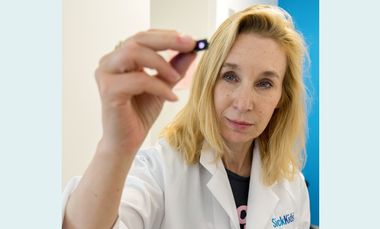
Spinal cord injury (SCI) often leads to a secondary problem of irregular blood pressure. That pressure problem then leads to an elevated risk of heart disease and stroke. Dr. Aaron Phillips has developed an innovative new technology that acts like a thermostat to regulate blood pressure in individuals with SCI.
Could a ketogenic diet slow the progression of ALS?
“Increase your caloric intake.” This is the number one recommendation that a clinician will make to a person recently diagnosed with Amyotrophic Lateral Sclerosis (ALS), a neurodegenerative disease affecting nerve cells in the brain and spinal cord, causing loss of muscle control. A high calorie diet is linked to better outcomes for ALS patients, but the question is – why? And what is the optimum diet to slow progression of the disease?
After becoming a neurologist in Germany, Dr. Zrenner moved to Canada, where he was awarded a Future Leaders in Canadian Brain Research grant through Brain Canada’s flagship program, which provides funding to early-career researchers. This grant supports his innovative research that combines two distinct non-invasive methods for treating neurological and psychiatric disorders such as depression and OCD.
Reprogramming cells to replace neurons damaged by ALS?
Meet the junior researchers behind the 2022 ALS Canada – Brain Canada Trainee Awards. Dr. Hussein Ghazale is the recipient of a $165,000 ALS Canada – Brain Canada 2022 Trainee Award.
Meet the students who received the 2022 ALS Canada – Brain Canada Doctoral Awards. PhD student Lucia Meng Qi Jadon (previously Liao) is the recipient of a $75,000 ALS Canada – Brain Canada 2022 Trainee Award. She will use the funding to investigate whether a newly discovered tag on TDP-43 might have an important role to play in ALS.
Meet the students behind the 2022 ALS Canada – Brain Canada Trainee Awards. Charlotte Manser is the recipient of a $75,000 ALS Canada – Brain Canada 2022 Trainee Award. As a PhD student at the University of Ottawa, she investigates how ALS-linked genes might contribute to the loss of normal stress granule formation.
International student explores understudied causes of ALS
Meet the junior researchers who received the 2022 ALS Canada – Brain Canada Trainee Awards. Donovan McDonald is the recipient of a $75,000 ALS Canada – Brain Canada 2022 Trainee Award. As a PhD student, he investigates how the function of tRNA could contribute to ALS disease processes.
Future change-maker in ALS pursues innovative research
Meet the students behind the 2022 ALS Canada – Brain Canada Trainee Awards. Charlotte Manser is the recipient of a $75,000 ALS Canada – Brain Canada 2022 Trainee Award. As a PhD student at the University of Ottawa, she investigates how ALS-linked genes might contribute to the loss of normal stress granule formation.
Dr. Alex Parker, at the Centre de recherche du CHUM, Université de Montreal, is one of the first two recipients of the newly introduced three-year, $300,000 ALS Canada–Brain Canada Discovery Grant. Dr. Parker’s grant was funded in generous partnership with Dr. Jean-Pierre Canuel Fund – SLA Québec.
Dr. Gary Shaw is a biochemist at Western University and one of nine ALS Canada-Brain Canada Discovery Grant recipients for 2022. “It’s always really exciting when you get a research grant, because you’re using your ideas that you’ve researched in the literature and created new experiments around,” he says. “After all that, it’s exciting to have other scientists review it and appreciate your ideas.”
Dr. Maria Vera Ugalde loves fundamental biology. As a biochemist at McGill University, she spends her days using advanced microscopy techniques to see into the intricate workings of our cells.